Showing posts with label gameplay. Show all posts

Monday, August 16, 2010

Company forums, personal information and the World of Warcraft

Those of you who have forums on your Web site understand that spammers and trolls can be a real nuisance. Perhaps you can relate to the trouble Activision Blizzard has with dealing with the multitude of undesirable posts on their official World of Warcraft forums.

On July 6th, Activision Blizzard, Inc. unveiled a controversial plan to help regulate the forums: Anyone posting on forums would have their real name displayed. The philosophy is that with real names associated with each posting, personal accountability will come into play and subscribers will be more civil. There was immediate backlash from WOW subscribers and users concerned about this proposed policy change. Personal privacy advocates were particularly concerned about publicly displaying real names in connection with Warcraft. Posters also worried about the possibility of cyberstalking and out-of-game harassment.

In an attempt to show how "harmless" the proposed change would be, a forum moderator posted his real name in the Blizzard Forum discussion on this topic.
Within minutes, community members posted all matter of personal information on him. Using only Google searches and his real name, they found and posted such info as his:

  • Cell phone number
  • Twitter and Facebook accounts
  • Personal photos
  • Mailing address
  • Maps to his house.
The community used this opportunity to illustrate how much information can be easily gathered, and how it could be dangerous when your real name is displayed in the forums.


There are simpler ways to combat undesirable posters than by publicly displaying personally identifying information. In her post, forum moderator Nethaera provides the basic methods used in forums to ensure that useful information will be seen and found by users:
  • Having the community rate posts (the Slashdot commenting model)
  • Highlighting posts based on rating (YouTube's "highest rated comment" model)
  • Improving forum search

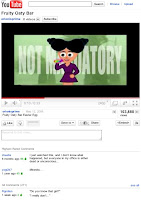
    YouTube has successfully adopted most of these methods to improve the comments on their videos (highest rated comments, voting up/voting down and automatically hiding spam/comments with a low rating).
The lesson is that spammers and trolls will make it on to your company forums, as they find their way onto EVERY board. The undesirable posters can manage to defeat almost any automated security precautions you can set up. The presence of an active group of forum moderators (employees of your company or a trusted enthusiast of your brand) goes a long way to creating an active, safe community. Even though forum trolls and spammers are a nuisance on forums, you do not need to take the drastic measures of posting your customer's personal information to combat them.

-by Kyle Kulakowski

Tuesday, December 22, 2009

Do you play the game or does the game play you?

Over the past weekend, I had the opportunity to use my Nintendo Wii and explore a game called Silent Hill: Shattered memories. I found the game's use of the the interaction capabilities of the console noteworthy. I won't give a review of this game here; however there are many user experience and interaction concepts that are set forth in this game.

WARNING - major spoilers ahead for anyone looking to play the game.

1.) Adaptive psychological personalization. Before you get to the main menu, the game will give you the following warning:
The game tracks how you respond to certain criteria (as well as the in-game psychology tests) and alters major elements based on that data. The game’s monsters, major locations, even how secondary characters look and act will vary for each person that plays it.

2.) Wii Remote interaction. The biggest problem I have had with the majority of Wii games is that few titles fully integrate the Wii Remote capabilities into gameplay. This is not so in SH:SM. The main use for the Wii Remote is as the game’s flashlight (if the player waves the Wii Remote around, the main character will mimic the action in the game)…but that is not all. The Wii Remote also functions as a cell phone (the player will have to hold the speaker in the Wii Remote to their ear in real life to hear phone calls in the game – just like they would a real cell phone).

3.) Attention to realistic detail. You can also place calls in the game – if you see a phone number anywhere in the game the character can dial out to it. Very few of these phone numbers are directly related to the game’s main plot. They are simply there to increase the realism of the game environment. BELOW: The player can call something as unnecessary as a toy recall hot line.


4.) Natural actions. In SH:SM, a majority of the Wii Remote actions are natural actions. If a monster latches on to you from the side, you will have to make a sideways push motion with the Wii Remote to get it off of you.

5.) Cueing user interactions. The player is given control cues at the appropriate time in which they are relevant. The player is not overburdened with memorizing all possible Wii Remote uses at once. BELOW: The player is cued how to answer a call only when the phone rings.


6.) Real-world benefit. At the game’s end, the game’s psychologist will transcribe a detailed profile of the player’s personality. If you play through the game honestly, it is a fairly accurate representation of your psychological profile. BELOW: The start of a multi-page analysis of the player that runs over the game’s credits.

Silent Hill: Shattered Memories was released on December 8th, 2009 and bears a Mature ERSB rating (with good reason).

View a full walk-through of the game at this user's YouTube account.

- by Kyle Kulakowski