Showing posts with label users. Show all posts

Monday, August 16, 2010

Company forums, personal information and the World of Warcraft

Those of you who have forums on your Web site understand that spammers and trolls can be a real nuisance. Perhaps you can relate to the trouble Activision Blizzard has with dealing with the multitude of undesirable posts on their official World of Warcraft forums.

On July 6th, Activision Blizzard, Inc. unveiled a controversial plan to help regulate the forums: Anyone posting on forums would have their real name displayed. The philosophy is that with real names associated with each posting, personal accountability will come into play and subscribers will be more civil. There was immediate backlash from WOW subscribers and users concerned about this proposed policy change. Personal privacy advocates were particularly concerned about publicly displaying real names in connection with Warcraft. Posters also worried about the possibility of cyberstalking and out-of-game harassment.

In an attempt to show how "harmless" the proposed change would be, a forum moderator posted his real name in the Blizzard Forum discussion on this topic.
Within minutes, community members posted all matter of personal information on him. Using only Google searches and his real name, they found and posted such info as his:

  • Cell phone number
  • Twitter and Facebook accounts
  • Personal photos
  • Mailing address
  • Maps to his house.
The community used this opportunity to illustrate how much information can be easily gathered, and how it could be dangerous when your real name is displayed in the forums.


There are simpler ways to combat undesirable posters than by publicly displaying personally identifying information. In her post, forum moderator Nethaera provides the basic methods used in forums to ensure that useful information will be seen and found by users:
  • Having the community rate posts (the Slashdot commenting model)
  • Highlighting posts based on rating (YouTube's "highest rated comment" model)
  • Improving forum search

    YouTube has successfully adopted most of these methods to improve the comments on their videos (highest rated comments, voting up/voting down and automatically hiding spam/comments with a low rating).
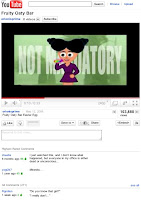
The lesson is that spammers and trolls will make it on to your company forums, as they find their way onto EVERY board. The undesirable posters can manage to defeat almost any automated security precautions you can set up. The presence of an active group of forum moderators (employees of your company or a trusted enthusiast of your brand) goes a long way to creating an active, safe community. Even though forum trolls and spammers are a nuisance on forums, you do not need to take the drastic measures of posting your customer's personal information to combat them.

-by Kyle Kulakowski

Thursday, November 19, 2009

Internet to the rescue of print? HP's MagCloud

Recently some of our brightest colleagues have been singing the praises of HP's MagCloud platform. The true value as we see it is the ability for publishers to leverage archived content, allowing readers/users to assemble customized print products that meet *their* priorities. According to HP, "MagCloud is a tool for a professional or mainstream publisher to create a publication that is sold before it is printed, but it can also be a consumer-driven self-publishing tool."

It's a logical step given what we've seen in the usability lab over the last ten years. Users will gravitate toward what interests THEM - *not* towards what publishers want them to see (thus the great value of "Related Content" links). There's a clear correlation in the music industry: People got tired of buying albums when they really just wanted a few songs. The industry fought the trend. Enter Napster and iTunes.

The publishing industry continues to be hobbled by 20th-century rules of engagement. What could happen if publishers, sitting on years of relevant content, allowed their readers to self-serve a product that is truly meaningful to them? What if educators could assemble special issues for their students? What if "love mark" readers - those who are diehard fans - could assemble their custom editions of anything from Arizona Highways to Playboy? Happy users. Targeted advertising opportunities. What a wonderful world it could be.

Monday, August 31, 2009

Seeking social media success? Do the groundwork first

Every client is different. The real-life answer to "how and when do we use social media?" is: Who are your users? Unless user types (a more granular view of audience) are clearly defined, a social media strategy is likely to underperform or misfire.

Criteria for defining users must include traditional demographics/psychographics; they must also include generational and regional differences in technology usage.

At Interface Guru, our experience is that very few companies outside of Silicon Valley approach their digital media presence from this perspective, including very well-known and well-funded brands.

I hope this note brings you a useful perspective on social media. The most important takeaway: Get Web 1.0 right before attempting Web 2.0. What does that mean? It means a Web site must be relevant, clean, and usable - social media cannot save a company from a poorly-designed Web presence.